School of Information


School of
Information
Overview
In the modern world, technology has woven itself into the fabric of society, binding people and information closer together than ever before. While this new digital era brings with it exciting innovations, it also brings a host of new, unexplored problems. In the School of Information (iSchool), our focus is on utilizing technology to solve real world, human-centered problems. With a combination of diverse courses, state-of-the-art equipment, and a team of knowledgeable and imaginative faculty, the iSchool gives students the tools they need to ensure a lifetime of success. We shape the future and improve the world through creativity and innovation.
You can find more information on the iSchool’s facilities here >
95%
Job placement rate
$80k
Average salary with one of our degrees (Glassdoor)
36th
Rank among top 50 computing colleges (Business Insider)
Undergraduate Programs
Home to the college’s Bachelor of Science degrees in computing and information technologies, human-centered computing, and web and mobile computing, the iSchool comprises the “full stack” computing knowledge that prepares professionals working on both the front- and back-end of the user experience.
Graduate Programs
A Master of Science Degree from the School of Information provides an opportunity for in-depth study to prepare for today’s high-demand computing careers. Big data is not just high transaction volumes; it is also data in various formats, with high velocity change, and increasing complexity and information delivery must be immediate and on demand.
Computing for All
Computing for All is a continuation of the “Computer Science for All'' initiative started by President Obama in 2016. The goal of which is to significantly increase the number of U.S. citizens and permanent residents receiving post-secondary degrees in the computing disciplines, and to encourage participation of other underrepresented groups in the discipline.
The need for Computing for All can plainly be seen in the way computers are altering and shaping virtually every career field, which means computing education needs to be accessible to all disciplines, backgrounds, and ages. To meet this rising demand and establish ourselves as a focal point of computing across the university, the School of Information offers classes for all students to take to improve their digital literacy and prepare them for an ever-evolving job market.
The Principles of Computing immersion is one such example of our commitment. This immersion is open to all majors outside of computing, mathematics, or informatics and introduces students to the central ideas of computing. All the ISCH courses are designed for and open to non-computing majors. Additionally, many other iSchool introductory-level courses, such as ISTE-140 Web and Mobile I and ISTE-230 Introduction to Database and Data Modeling, are appropriate and available to non-computing majors.


Spotlights
-
April 12, 2024
![students gather at a table in an open area working on a project together.]()
RIT offers Summer Institute for Teaching and Learning and AI Symposium May 14-15
Collaborative, self-directed, and socially conscious are just a few of the characteristics that enable 21st-century students to thrive in today’s world. At RIT’s Summer Institute, educators are coming together to discuss best practices for teaching the next generation.
-
February 15, 2024
![An overhead view of the MAGIC Spell Studios atrium, where people playlets That Damn Goat.]()
Inside the making of 'That Damn Goat,' RIT's latest video game
Chaos is the only constant in "That Damn Goat," a party, "anti-Covid" video game made by around 60 RIT faculty, students and staff. The project was led by School of Film and Animation faculty Brian Larson (creative director) and Jesse O'Brien (art director).
-
February 13, 2024
![a list classic yellow emoji faces appear on a phone screen]()
Do emojis belong in the workplace?
Atlassian talks to Garreth Tigwell, assistant professor in the School of Information, about the misinterpretations and accessibility challenges that emoji use present in the workplace.


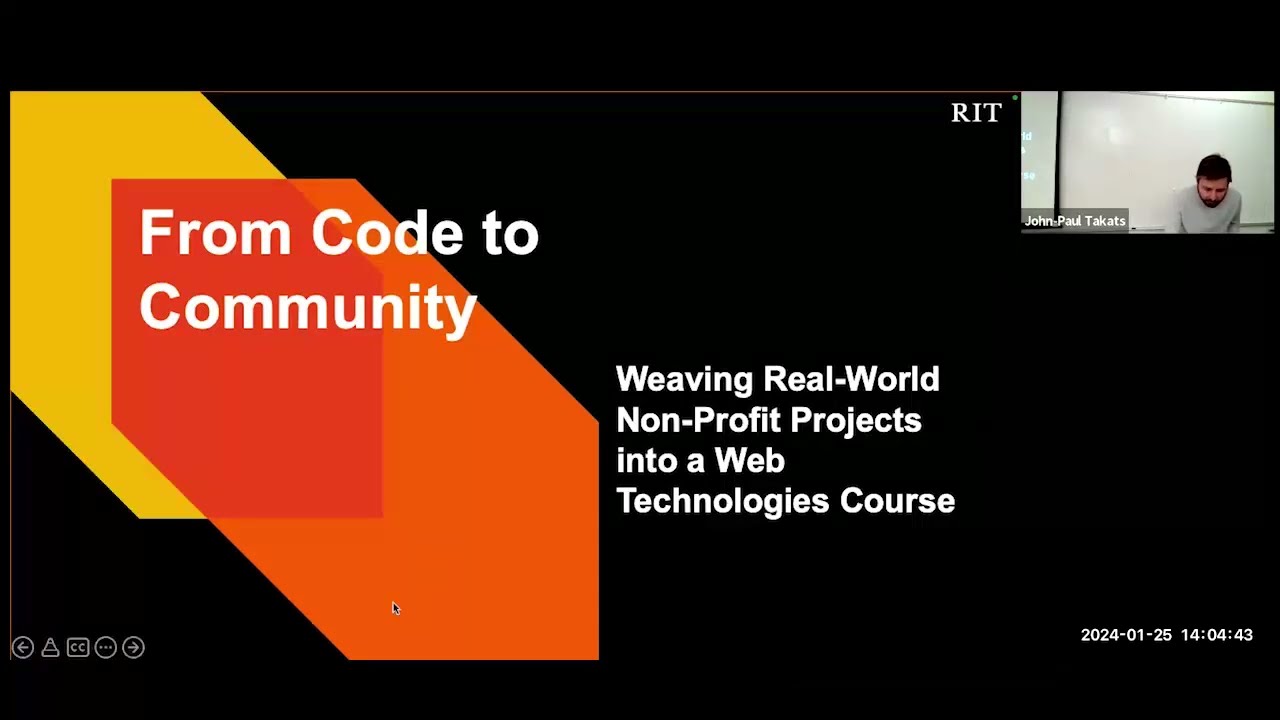
From Code to Community: Weaving Real-World Non-Profit Projects into a Web Technologies Course
John-Paul Takats
In this talk, Professor John-Paul Takats will share his experiences of transforming a typical group project that was done with a made-up client / topic into a collaboration between graduate students...
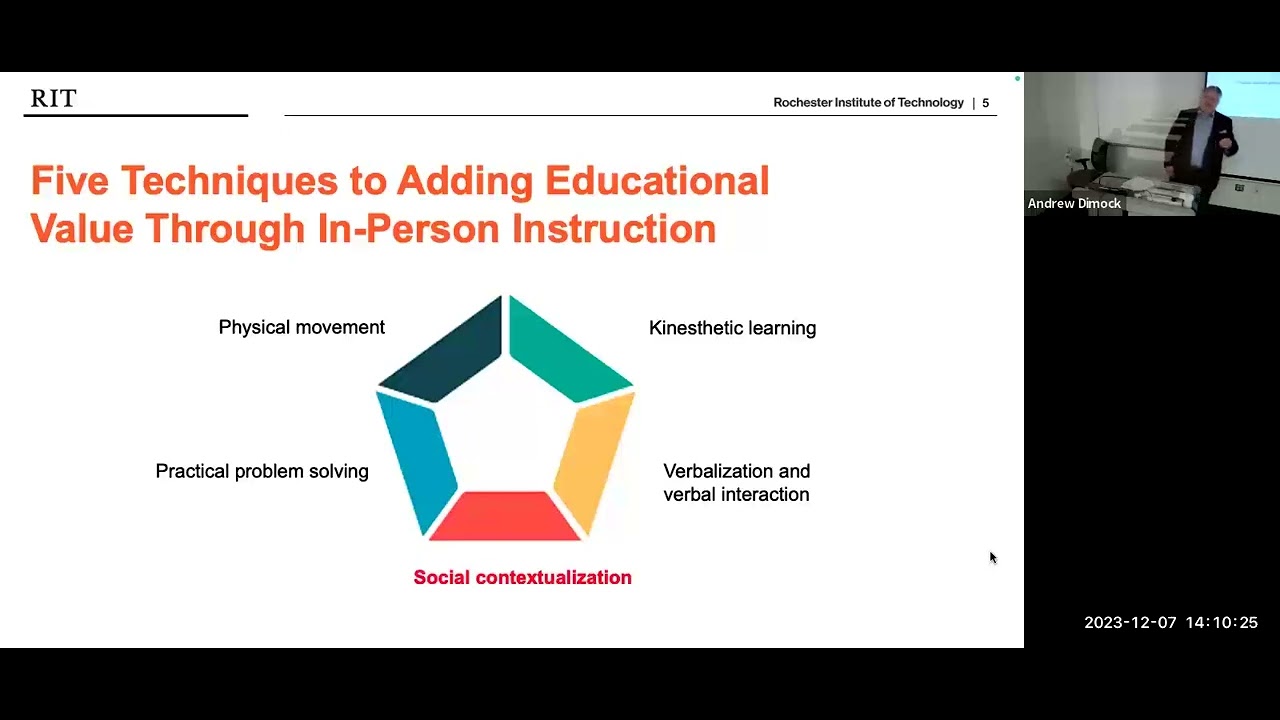
SHEDing Light on the Value of In-Person Instruction
Andrew Dimock
While technology has expanded the breadth, depth, and delivery mechanisms involved in learning over time, remote learning is effective and as ancient as the written word. Yet, in person instruction...
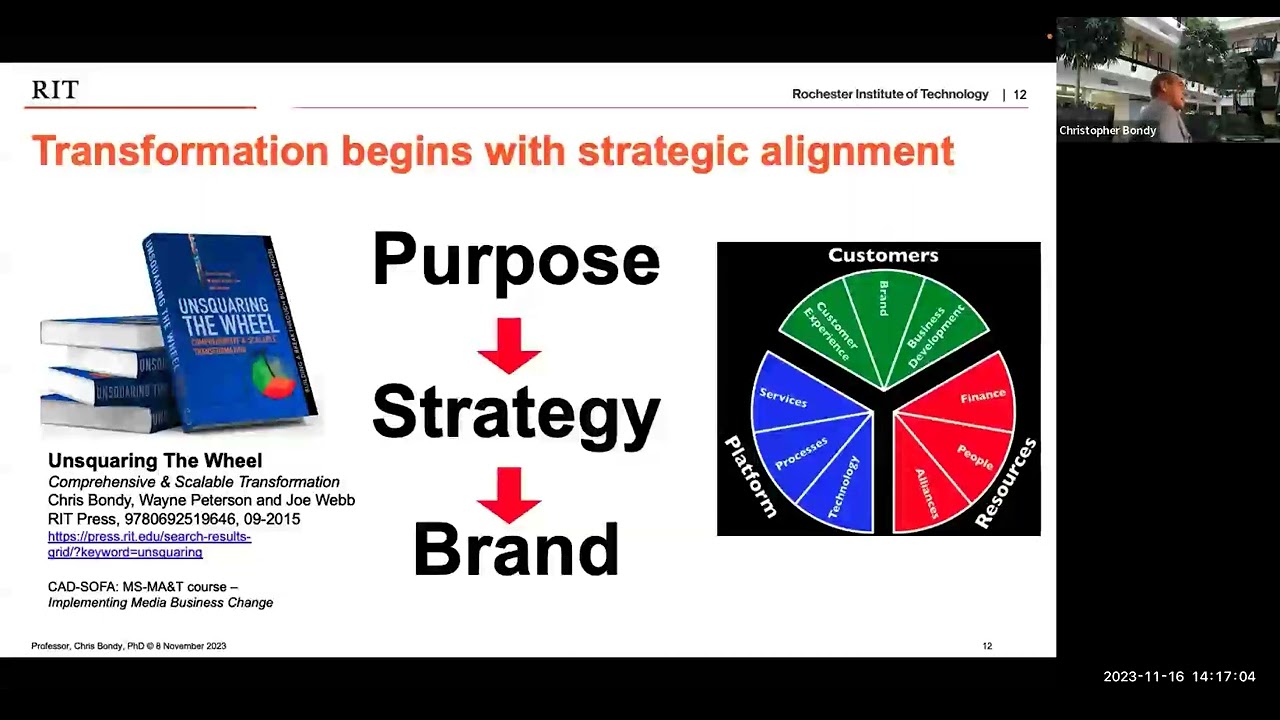
Innovative Approach to Growing Programs in Higher-Ed
Christopher Bondy
This talk will profile a novel approach to program growth that includes an assessment of the lifecycle journey of a student in the Health Informatics program. The immersive discovery or "journey map"...
Choosing the Right Major
Alexis Gordon
Picking the right major can be difficult. A survey performed by the Department of Education in 2017 found that close to one third of college students switch their major within three years of...
Find Your Own Path
Dominique Molee
RIT provides its students with countless options to shape their future. Whether you study abroad or go on co-op, everyone leaves with their own, unique experience. Read on to see how one of our...

A Lasting Impact in Accessibility and Usability
Faculty Emerita Vicki Hanson
Although Vicki Hanson stepped away from her full-time faculty role within the School of Information more than three years ago and has since become the Chief Executive Officer of the Association for...
Student Resources
Current Students
Please refer to our iSchool cooperative employment guides for information on policies and procedures:
For information on the School of Information's Creative, Innovative & Research Experience:
- iSchool CIR Experience (ISTE-498) Guidelines
- iSchool CIR Experience Approval From
Undergraduate
Graduate
- Independent Study Form
- Incomplete Grade Form
- Grad Special Topic Proposal
- Capstone Template
- Scholarships
- Graduate Project Capstone
- Graduate Thesis Capstone
- MS in AI
Institute Forms
- All here, including Change of Program Forms.
Students pursuing a Master of Science in Information Technology and Analytics and Human-Computer Interactions have opportunities to complete Capstone Projects. Check out some of our recent submissions>
Tutors / Lab Information
The Tutoring lab, located in GOL-2670, is a wonderful resource for iSchool students. Students struggling with Java, Database, mobile or Web projects will find useful assistance provided by the iSchool tutors. Additionally, the newly formed GCCIS Tutoring Center, located in GOL-2410, can help iSchool students looking for assistance in ISCH-110.
The lab is staffed with graduate students who are experts in their tutoring areas. The iSchool tutors are a resource - all students should feel free to ask them for help!
Students can also receive assistance in the GCCIS Tutoring Center.
Each semester has an enrollment period in which students use the Student Information System (SIS) to choose classes to take the following semester. Enrollment for spring courses typically happens in November, and enrollment for fall courses in April. Students are assigned a specific enrollment window during the enrollment period; this window is the only time (besides add/drop week) that students can enroll in courses. Check SIS for your personal enrollment window.
Using Your Shopping Cart
The shopping cart is designed to help students manage their course selections for the following term. It allows you to plan your schedule in advance, and makes registering for courses quicker and easier. Please note that placing a class in your shopping cart does not mean you are enrolled in that class, nor does it guarantee you a seat in that class. It is simply a tool for planning purposes.
Shopping carts become available a few weeks before the enrollment period, allowing you plenty of time to talk to your advisor and plan your courses. They open at the same time for all students, regardless of credit hours completed or if a student has an advising hold on their account.
We highly recommend students utilize their shopping cart. It can alert you ahead of time to things like time conflicts, advising holds, and other issues.
Add/Drop Week
The first week of each RIT semester is 'Add/Drop Week,' which allows students to tweak their schedules, adding and dropping courses without penalty. During Add/Drop week, iSchool academic advisors hold special walk-in hours for students to help them finalize their schedules. Specific walk-in hours are posted in the iSchool weekly newsletter, on iSchool social media, and are displayed in the iSchool main office in GOL-2100.
The easiest way to drop a class during Add/Drop week is to use the 'drop' function in SIS. Full instructions on how to drop a class in SIS can be found online.
Students may also drop classes in-person via an advising walk-in, or at the RIT Office of the Registrar. Remember, dropping a course during Add/Drop week leaves no record on your academic transcript.
Withdrawing From a Course
After the Add/Drop week ends, dropping a course results in a "drop with penalty," AKA "withdrawing" from a course. You can withdraw from a course on SIS the same way you drop a course, but withdrawing will result in a 'W' penalty grade appearing on your academic transcript. If you are considering withdrawing from a class, we strongly encourage you to talk to your professor or academic advisor first. A withdrawal may also affect any financial aid you are receiving, so take that into account as well.
Course Waitlists and Swapping
Sometimes courses you want to take may be full before your enrollment window opens. This can happen with both required courses and electives. If this happens, you can join the waitlist for that course, which is also done via SIS. During the enrollment period, The iSchool is constantly monitoring course enrollment and waitlist numbers, and we'll do everything we can to make sure students get into the courses they need.
That being said, waitlists do not guarantee enrollment, so we advise students to plan for backup courses if some of their first picks don't work out. This is especially true if the course you're waitlisted on is not offered by the iSchool. We cannot override SIS and "push" our students into full classes that are offered by another department.
Another option is setting up a course swap, which means that if you enroll in your second choice course and then a seat opens up in your first choice, you can "swap" into that first choice course, effectively dropping your second choice without penalty. Course swaps are also done via SIS; for specific instructions, refer to the official RIT documentation.
Auditing Courses
Auditing a course means that a student may enroll in a course, but will not receive a grade or credit upon completion of the material. Students may choose to audit courses for various reasons, usually for academic exploration purposes or self-enrichment. At RIT, wellness classes make up the majority of audited courses. However, departments may allow students to audit an academic course on a case by case basis. Audits for non-wellness classes will need to be approved by the instructor using the Add/Drop Audit form, available on the Office of the Registrar's Website. Please note that audits cannot be officially processed until the first week of the academic term. If you wish to audit a course you've already taken, you must see your advisor before you enroll in the course.
Academic Advisors
All iSchool students are assigned a professional academic advisor, specific to their major. Academic advisors guide students through their chosen program's curriculum, helping them develop their academic plans. They also help students by interpreting institutional policies, referring students to other resources on campus, and discussing issues of concern regarding students' academic progress. Frequent student-advisor contact is a proven factor in student success. Ultimately, students are responsible for making their own decisions based on the information and advice their advisor offers.
To make an appointment with your academic advisor, call the iSchool Student Services Office at 585-475-2700, or stop by the office in-person at Golisano Hall, room 2100. The office is open Monday-Friday, 8:30am - 4:30pm. Due to our advising team having very full schedules, same-day appointments are not permitted. Please plan ahead!
Who Is My Academic Advisor?
Elisabeth Foster (emfics@rit.edu): Undergraduate Degrees
Hannah Pruch (hcpiao@rit.edu): Undergraduate Degrees
Jill Persson (jmpics@rit.edu): Graduate students
Enrollment Helpful Hints (.pdf)
Faculty Advisors
While faculty advisors are not formally assigned, we encourage students to talk with their professors about careers or research in their field of expertise. Many of our full-time faculty have extensive experience working in industry, while others are engaged in research projects (and they're always looking for student assistance). Check out our Faculty page of this website to get a better understanding of what each faculty member specializes in, and swing by their office hours for a chat!
Changing Your Major
If you think you want to switch to a different major, either within iSchool or to another department, please review the "Change of Program Students" section of this website.
Academic Alerts, Probation, and Suspension
Academic alert emails are sent from your instructor when they feel you are doing poorly in their course. This email is a friendly warning that you may get into academic trouble - like receiving a low final grade or outright failing the course - if you do not act soon. You can respond to academic alerts by meeting with your professor to learn what you can do to improve in the course. All iSchool faculty want students to succeed in their classes, but they can't help you if you don't talk to them first. Additionally, you may want to meet with your academic advisor. RIT also offers many resources for students struggling academically, and your academic advisor can help you explore those resources.
Students that are unable to rectify their poor academic performance can be placed on academic probation or face suspension from RIT. Please read RIT's official policy about academic probation/suspension, and contact your academic advisor with any specific questions.
The mission of the iSchool Student Ambassadors is to act as a student knowledge base for all things iSchool. Using their leadership and interpersonal skills, ambassadors establish relationships with prospective students and their families, current students, and the larger RIT community. Through these relationships, ambassadors will educate their audience about iSchool programs, curriculum, and facilities.
Overview
The iSchool is always looking to add more student ambassadors to its ranks, and is actively recruiting throughout the Spring and Fall semesters. Please review the following information regarding the program, and feel free to apply online if it sounds like the Student Ambassador program is right for you!
Criteria:
- Full time iSchool student in good conduct standing
- Minimum GPA of 2.5.
- Complete the online application and attend an in-person interview
- Be outgoing, personable, and enthusiastic
Duties:
The core responsibility of a student ambassador is to positively represent the iSchool department at various functions throughout the academic year. iSchool ambassadors are more than just tour guides. They are leaders entrusted to impart the mission, vision, and values of the iSchool to students and the community. Specific instances may include:
-
Assisting in planning and staffing iSchool Open Houses
-
Participating in student panels for visiting prospective students and their families
-
Giving tours of and answering questions about department facilities for individuals, families, and groups including:
-
Prospective students (both freshmen and transfer)
-
Industry guests
-
High school or middle school students
-
-
Assisting in hosting information sessions at their former local high school (optional if relevant)
-
Suggest and help organize iSchool student community-building activities
-
Attend annual Industrial Advisory Board meetings
-
Attend accreditation reviews
-
Act as a source of input and feedback about iSchool initiatives and events
-
General leadership in the iSchool student community
Expectations
Student ambassadors are chosen in part for their enthusiasm, and we expect that enthusiasm when volunteering for iSchool events. We understand life can be hectic and we don’t expect you at every event, but you must attend a minimum of one department function per semester.* We encourage you to volunteer for as many events as you are able and failure to volunteer for a minimum of one event will lead to your dismissal as a student ambassador. We depend on the support of our ambassadors to make our iSchool functions a success!
*If you are on co-op during your tenure as an ambassador, the above requirement is waived until you return to RIT. Of course, if you want to attend an event as an ambassador while on co-op, we will welcome your participation.
Perks
- Official iSchool T-shirt
- Resume enhancement via leadership and volunteer experience
- Letter of recommendation from iSchool Coordinator of Communications and Student Experience (if requested)
- Opportunity to establish relationships and work with faculty and staff
- Opportunity to give input on future iSchool events, and feedback on past ones
- Opportunity to establish personal and professional contacts outside RIT
Interested students are encouraged to apply via our Google Forms
For any additional information regarding the Student Ambassador program, please contact the iSchool Marketing and Student Experience coordinator, Tyler Monica, at tyler.monica@rit.edu.
Current Ambassadors
Graduate Student Ambassadors:
- Gautham Krishna
- Tejaswini Lingaraddi Vantigodi
- Mililani Rosare
Undergraduate Student Ambassadors:
- Justin Man
- Noelle Voelkel
- Andrew Apollo
- Lily Chau
- Destiny Patton
The iSchool offers three unique study abroad opportunities for undergraduate students via international partnerships with RIT satellite campuses in Croatia, Dubai, and Kosovo. Studying abroad doesn't mean putting your degree on hold; the curriculums are exactly the same abroad as they are in Rochester. The WMC program is mirrored in Croatia, with the CIT program is taught in Dubai and Kosovo. All three of the iSchool's undergraduate programs share courses at the start of their degree, so HCC students are easily able to take advantage of our global campuses as well.
While these two opportunities are exclusive to our department, we encourage students to explore the wealth of other study abroad experiences offered by RIT.

Dubrovnik, Croatia
Dubrovnik is the most southern city in Croatia and is a prominent tourist destination on the Adriatic Sea along the Dalmatian Coast. (You may recognize the city as King`s Landing from the HBO series Game of Thrones). Students attend Rochester Institute of Technology Croatia, and carry a minimum of 15 credit hours in both Web and Mobile Computing and Liberal Arts courses.
Watch a student film on their experience studying in Dubrovnik.

Dubai, United Arab Emirates (UAE)
Students study in the heart of Dubai Silicon Oasis, a technology park with over 800 international companies. Travel to Dubai and experience the man-made palm islands, shop in the world's largest mall, ski indoors year-round, and travel through the desert in a 4-wheel drive vehicle, horseback or camel. Students attend RIT Dubai, and carry a minimum of 15 credit hours in both Computing and Information Technology and Liberal Arts.
Student Testimonials

Amanda Barton, Graduated IT student
I studied abroad at RIT Croatia, the Dubrovnik campus, in the spring semester of my second year (2014). Honestly, the study abroad experience itself is fairly indescribable. I had the chance to meet new people, eat tons of delicious food, participate in cultural events, and experience things I never could have imagined. Trying to articulate what that means to me is incredibly difficult. I learned a lot about myself that I never would have if I hadn't seized the opportunity to go abroad. I highly recommend that anyone who wants to travel should definitely take advantage of the chance to study abroad.

Zachary Kutik, Graduated NSA student
Studying abroad was one of the best decisions I ever made in my life, the second being choosing Croatia as my destination. It was such a beautiful contrast to Rochester. Everyone was very kind and welcoming; one of my Croatian friend's families practically adopted me for my stay there, and I still keep in touch with them today!
- The AWARE-AI program offers traineeships and integrated research-educational opportunities in the area of artificial intelligence for students from multiple graduate programs: https://www.rit.edu/nrtai/
- The RIT AI list is an email list managed by RIT’s Center for Human-aware AI with announcements about research talks and other AI-themed programming : https://lists.rit.edu/mailman/listinfo.mmcgi/rit-ai
The spring commencement ceremony typically happens during the third week of May. Every student that wants to graduate at that time must apply to graduate before April 1st. Applying for graduation sets in motion a process that ensures you have met all requirements to graduate. To apply:
- Log in to SIS.
- Go to student center and select 'apply for graduation' in the drop down menu.
- Select the earliest term in which you expect to have all requirements completed (both classes and co-ops)
Once you have applied, your academic advisor will perform a degree audit and email you the results. The audit will let you know if you have any requirements remaining that will impede your graduation, and if you'll be able to graduate in the timeframe you expect.
Failure to apply before the April 1st deadline has lasting consequences; talk to your academic advisor if you miss this important deadline.
Prospective Students
The iSchool offers three unique study abroad opportunities for undergraduate students via international partnerships with RIT satellite campuses in Croatia, Kosovo and Dubai. Studying abroad doesn't mean putting your degree on hold. The curriculums are exactly the same abroad as they are in Rochester and courses are taught in English. The WMC program is mirrored in Croatia, with the CIT program being taught in Dubai and Kosovo.
While these three opportunities are exclusive to our department, we encourage students to explore the wealth of other study abroad experiences offered by RIT.
Croatia
Croatia offers two campuses with unique perspectives in Dubrovnik and Zagreb.
Dubrovnik is the most southern city in Croatia and is a prominent tourist destination on the Adriatic Sea along the Dalmatian Coast. (You may recognize the city as King's Landing from the HBO series Game of Thrones). Students attend Rochester Institute of Technology Croatia, and carry a minimum of 15 credit hours in both Web and Mobile Computing and Liberal Arts courses.
Watch a student film on their experience studying in Dubrovnik.
Zagreb is the capital city of Croatia and most heavily populated. It offers the big city feel, and the campus enrolls students from Europe, Australia, South America and the United States.
Dubai, United Arab Emirates (UAE)
Students study in the heart of Dubai Silicon Oasis, a technology park with over 800 international companies. Travel to Dubai and experience the man-made palm islands, shop in the world's largest mall, ski indoors year-round, and travel through the dessert in a 4-wheel drive vehicle, horseback or camel. Students attend RIT Dubai, and carry a minimum of 15 credit hours in both Computing and Information Technology and Liberal Arts.

Kosovo
Kosovo is known as the country of "young Europeans." Its citizens are well-educated, multilingual, dynamic and have an abundance of entrepreneurial spirit.
Student Testimonials
Amanda Barton, fourth-year IT student
I studied abroad at RIT Croatia, the Dubrovnik campus, in the spring semester of my second year (2014). Honestly, the study abroad experience itself is fairly indescribable. I had the chance to meet new people, eat tons of delicious food, participate in cultural events, and experience things I never could have imagined. Trying to articulate what that means to me is incredibly difficult. I learned a lot about myself that I never would have if I hadn't seized the opportunity to go abroad. I highly recommend that anyone who wants to travel should definitely take advantage of the chance to study abroad.
Zachary Kutik, fourth-year NSA student
Studying abroad was one of the best decisions I ever made in my life, the second being choosing Croatia as my destination. It was such a beautiful contrast to Rochester. Everyone was very kind and welcoming; one of my Croatian friend's families practically adopted me for my stay there, and I still keep in touch with them today!
How to Succeed in the iSchool
Like most other university departments, students need to meet certain basic requirements to do well in the iSchool: attend class, get to know your professors (visiting their office hours is a great way to do this) and meet your classmates. There are a few iSchool-specific topics however:
Buying or Bringing a Computer to RIT
The majority of iSchool students bring their own computer with them to RIT. While it is entirely possible to excell in iSchool classes and eventually graduate without owning your own computer, we find that most students enjoy the convenience of being able to take their work outside the labs. We also allow the use of personal computers in our classes, if students wish to do so. In fact, many of our professors prefer using open source software to teach, and our students like the convenience of being able to download the software and continue their work at home.
That being said, there are certain scenarios (in-class exams, for example) that require use of iSchool lab computers. If you are thinking about purchasing a computer to bring to RIT, our campus Information Technology Services Office has recommended support and purchasing guidelines.
Prior knowledge of programming languages
Many of our students enter our degree programs with some prior knowledge of code, whether it was from a high school class, online course, or other resource. This prior knowledge is great, but not required. Our introductory classes are designed to teach concepts from the ground up, meaning that a student with zero prior knowledge of class concepts is just as likely to succeed as a student that has experience with the material.
If you do however have access to computing courses through your high school, we encourage you to take them! You can also learn on your own through various free online resources; we like Code Academy. For specific topics, we recommend learning the programming language Java.
Getting involved in iSchool
You'll often hear that to make the most of your college experience, you need to "get involved" on campus. This axiom holds true in the iSchool, and there are several ways to get involved in the department. We have 3 student-run clubs that cater to different interests:
- Localhost is for students interested in web and mobile application design & development, and user experience design.
- NextHop is geared towards students that have an interest in computer networking and systems administration.
- UX (User Experience) Club is a group that aims to promote the visibility of User Centered design and research on the RIT campus.
Labs
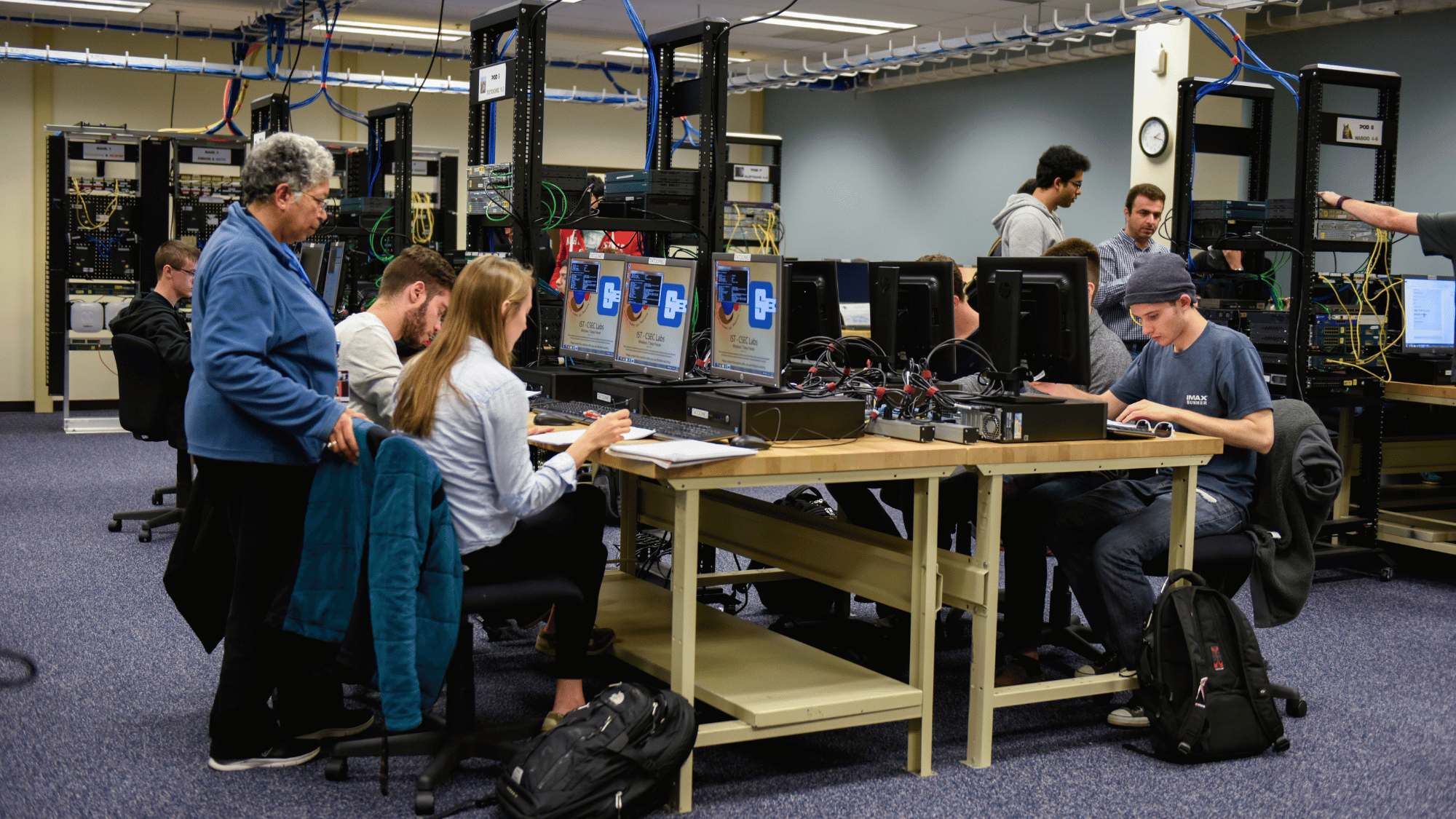
The iSchool has 11 computing labs dedicated to student use. All labs feature industry standard equipment, and are open 7 days a week for student use. Students have access to both OSX and Windows, and all of the lab computers share the same software image, meaning you can pick up your work where you left off, no matter which lab you're in.
Tutors
Tutoring services are also available in our labs. Our tutors are highly successful and experienced students. They are hired to help students struggling with introductory concepts or classes.
Transferring Course Credit
All course credit, whether it is from another college, AP, IB, or otherwise, must be submitted to the RIT Office of Admissions. More information about transferring credit can be found online.
Visit Us!
We are happy to accommodate you and your family, should you wish to visit our department. To make the most of your visit, we please ask that you first call ahead to the RIT Admissions Office (585-475-6736) and then to our office (585-475-2700). Alternatively, you can fill outa visit form with our department here. This will allow us to coordinate with the admissions office and prepare for your arrival. You can find more info about visiting RIT online.
During your visit to our department, you'll meet with one of our professional academic advisors, who will outline the curriculum and answer any questions you may have. You'll also have the opportunity to take a tour of our department facilities, led by one of our current student ambassadors. We can also arrange for you to meet other members of staff or faculty, including our department chair, academic coordinators, and degree program curriculum leads. Just make sure to let us know who you want to meet before you visit!
Interested?
If you think one of our programs is right for you, apply via the RIT Admissions website.
Welcome to the School of Information (iSchool) orientation website! We are very excited for you to join the iSchool community. Throughout this site you will find an explanation of advising resources available to students in our degree programs, details regarding incoming credit, and departmental contact information. Use them as a guide to help you transition into life in the iSchool.
Change of Program - UG Students
Industrial Advisory Board
The iSchool Industrial Advisory Board (IAB) consists of a broad range of industry representatives. The board helps us stay current with industry trends, offering insight on everything from curriculum to teaching methods. Our IAB plays an integral role in helping us maintain a balanced, vibrant school.


